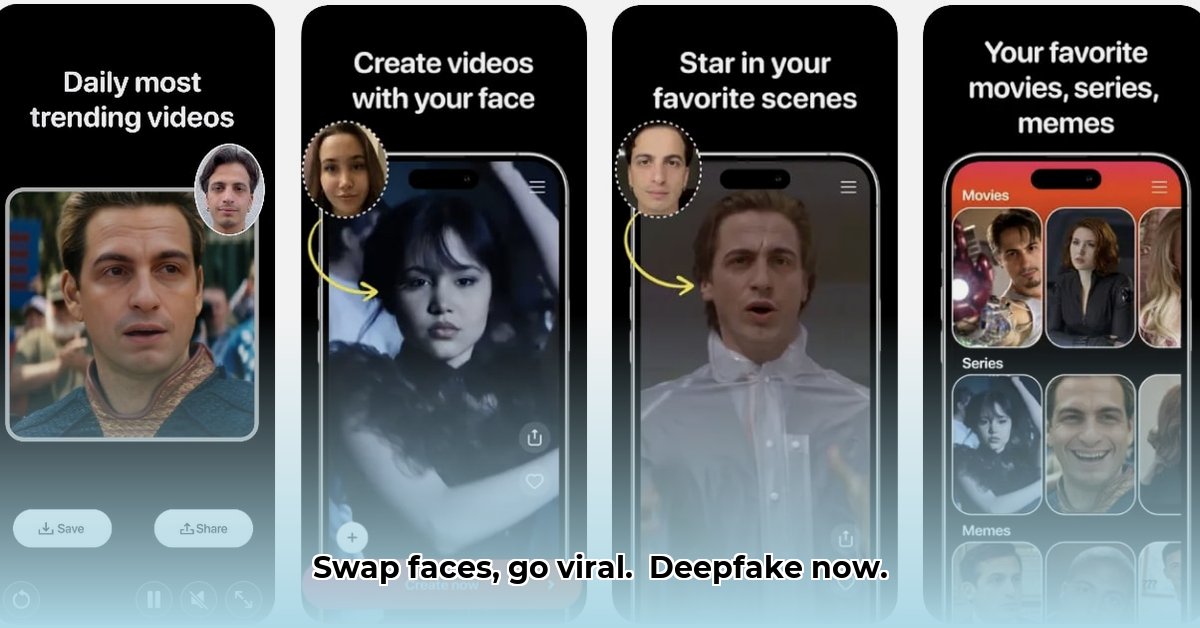
Deepfake Face Swap APKs: A Viral Video Revolution
Have you seen those videos online where a face is seamlessly swapped onto another person’s body? That’s the power of deepfake face swap APKs – apps using artificial intelligence (AI) to create incredibly realistic video manipulations. These aren't simple overlays; sophisticated AI analyzes facial expressions, lighting, and movements to make the swaps virtually undetectable. The results can be hilarious, stunning, or deeply troubling, depending on their use. This rapidly evolving technology demands our understanding.
The Technology Behind the Magic: AI Makes It Real
How do these apps work? The magic lies in deep learning, a type of AI trained on massive datasets of images and videos of faces. This teaches the computer to recognize and understand facial features, expressions, and movements in incredible detail. The app then uses this knowledge to replace one face with another, making the transition look incredibly natural. It’s a complex process, resulting in astonishingly realistic videos. This isn’t just pasting a face; the AI adapts to lighting, perspective, and expressions for a convincing illusion. Isn't it remarkable how far AI has come?
Ethical Concerns: A Double-Edged Sword
The ease of creating these hyper-realistic videos presents serious ethical challenges. While the creative possibilities are exciting—imagine the possibilities for memes and short films!—the potential for misuse is equally significant. These apps could create damaging fake videos, potentially leading to false accusations, defamation, or identity theft. Consider the impact on individuals and political discourse. The spread of misinformation via convincing deepfakes is a real and growing danger. Furthermore, non-consensual deepfakes—using someone's likeness without permission—raise significant privacy and ethical concerns. This leads us to a critical question: How do we balance innovation with ethical responsibility?
The Deepfake App Market: A Growing Landscape
The market for deepfake face swap APKs is exploding. Numerous apps boast unique features and capabilities. Some focus on straightforward swaps, while others offer comprehensive video editing. However, this proliferation highlights the urgent need for ethical guidelines and responsible development. The ease of access – a simple smartphone download – is a double-edged sword. While democratizing access, it raises crucial questions about regulation and responsibility. Given the current market growth, what regulatory measures are needed to mitigate potential risks?
The Future of Deepfakes: A Race Against Time
What's next? We'll likely see even more advanced and powerful deepfake apps, with improvements in realism potentially reaching indistinguishable real-time deepfakes. This advancement will bring even greater potential for misuse. However, the development of detection technology—tools that reliably identify deepfakes—is equally crucial. This is a race against time. Scientists, developers, and regulators must collaborate to ensure ethical use and implement necessary safeguards. What innovative solutions are needed to stay ahead of this evolving technology?
Pros and Cons of Deepfake Face Swap Apps
| Pros | Cons |
|---|---|
| Entertaining and fun to use | High potential for misuse and malicious intent |
| Unleashes creative possibilities | Risk of non-consensual creation and distribution |
| Relatively easy access and use | Can be used to spread misinformation and false narratives |
| Potential for professional video editing | Ethical implications far outweigh entertainment value in many cases |
| Can be used for educational purposes | Requires careful consideration regarding consent and potential harm |
Responsible Use and the Path Forward
The long-term impact of deepfake face swap APKs hinges on our collective choices. We must use this technology responsibly, considering the ethical implications of every video created and shared. Reporting misuse and promoting deepfake detection tools are crucial steps. Educating the public about the risks is equally important. We need a balanced approach – embracing the creative potential while mitigating risks and preventing harmful use. The future of this technology rests on our ability to navigate this complex ethical landscape responsibly. What concrete steps can we take to promote responsible AI development?
How to Detect AI-Generated Face Swaps in Videos
Key Takeaways:
- Deepfake face swap apps are becoming increasingly sophisticated, making detection challenging.
- Several tools exist to help identify these manipulated videos, but their effectiveness varies.
- The accuracy of detection tools depends on the deepfake's quality. Advanced deepfakes are harder to catch.
- Ethical concerns surrounding deepfakes, especially non-consensual creations, are significant.
- The arms race between deepfake creators and detection developers is ongoing.
Understanding the Technology Behind Deepfake Face Swaps
Deepfake face-swap apps use AI, specifically deep learning algorithms, to seamlessly blend faces onto bodies in videos. Imagine a sophisticated cut-and-paste operation, but automated. Their ease of use significantly increases the potential for misuse. The AI trains on vast amounts of video data, learning to replicate facial expressions, movements, and subtle nuances. It's like teaching a computer to mimic a human chameleon. Given this sophistication, how can we improve detection techniques?
The Ethical Tightrope: Consensual vs. Non-Consensual Deepfakes
Deepfake technology's ease of use presents a significant ethical dilemma. While some use them for harmless creations, the potential for malicious use is substantial. Non-consensual deepfakes, used for revenge porn or political disinformation, pose significant risks. These videos can ruin reputations and incite violence. The lack of consent is a major ethical breach, highlighting the critical need for responsible development and use. How can we ensure that this technology is used ethically and responsibly?
How to Detect AI-Generated Face Swaps in Videos
While perfect detection isn't always possible, several methods can help.
- Look for inconsistencies: Examine for inconsistencies in lighting, shadows, and skin texture. Do the facial features blend naturally? Deepfakes sometimes exhibit glitches.
- Analyze the context: Is the video's source credible? Does the content seem unusual or out of character? A context check can help identify potentially manipulated content.
- Use detection tools: Several apps and online tools are designed to detect deepfakes. Their accuracy varies, though.
- Consider the audio: Listen for inconsistencies between lip movements and speech, or unusual audio quality.
- Remain skeptical: Question the authenticity of videos that seem too good to be true or designed to evoke specific emotional responses.
A Look at the Detection Tools Landscape
The market for deepfake detection tools is rapidly expanding. The accuracy of these tools varies, and an arms race continues, with new deepfake methods requiring constant improvements in detection capabilities. Researchers are working on more robust methods, but these are still in their early stages. With the continuous evolution of deepfake technology, what advancements are needed in detection methods?
The Future of Deepfakes and Detection
The future is a constant race: More sophisticated deepfakes will emerge, pushing detection tool developers to invent advanced countermeasures. Greater public awareness, ethical guidelines, and legislation regarding the creation and distribution of deepfakes are crucial. Responsible usage is paramount. How can we effectively balance innovation with ethical considerations in this rapidly evolving field?
⭐⭐⭐⭐☆ (4.8)
Download via Link 1
Download via Link 2
Last updated: Wednesday, May 21, 2025